
Hearing Aid Battery Sizes Explained: 10, 312, 13 and 675
By 3 Boyz Printz · October 4, 2026
If you or someone you love wears hearing aids, you've probably stood in a store aisle staring at a wall of tiny batteries wondering which one you need. The good news: there are only four common sizes, and every package uses the same color code. Here's everything you need to know to buy the right battery and keep your spares safe.
The four hearing aid battery sizes
Hearing aid batteries are named by number, and the industry uses a standard color on the packaging and on each battery's sticker tab so you can tell them apart at a glance.
| Size | Tab color | Approx. size | Typical use |
|---|---|---|---|
| 10 | Yellow | 5.8 × 3.6 mm | Very small, in-the-canal and completely-in-canal aids |
| 312 | Brown | 7.9 × 3.6 mm | Small behind-the-ear and in-the-canal aids |
| 13 | Orange | 7.9 × 5.4 mm | Behind-the-ear and in-the-ear aids |
| 675 | Blue | 11.6 × 5.4 mm | Larger, high-power behind-the-ear aids and cochlear implant processors |
Notice that 312 and 13 have the same diameter. The difference is thickness: a 13 is noticeably taller. That's why they aren't interchangeable even though they look similar from the top.
How long do hearing aid batteries last?
Generally, the bigger the battery, the longer it lasts. Battery life depends heavily on your hearing aid, how many hours a day you wear it, and features like Bluetooth streaming, but typical ranges are roughly:
- Size 10: about 3 to 7 days
- Size 312: about 3 to 10 days
- Size 13: about 6 to 14 days
- Size 675: about 9 to 20 days
Because smaller batteries can run out in just a few days, it pays to always have a spare or two with you.
Tips for getting the most out of every battery
- Leave the sticker tab on until you're ready to use it. Most hearing aid batteries are zinc-air: they start working when air reaches them. Once the tab comes off, the battery begins to drain whether it's in your hearing aid or not.
- Wait about a minute after removing the tab before putting the battery in. Many manufacturers recommend this so the battery can fully "breathe" and reach full power.
- Store batteries at room temperature. The refrigerator isn't a good idea, since condensation can form when they warm back up.
- Keep them away from coins and keys. Loose batteries rattling around in a pocket or purse can touch metal and short out, and the tabs can get scraped off.
- Open the battery door at night when your hearing aids are off, so moisture can escape.
The easy way to carry spares
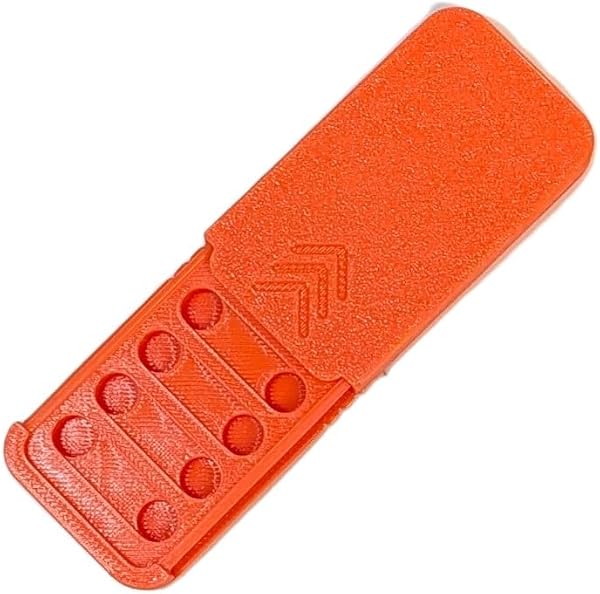
Loose spares tend to get lost, crushed or drained in the bottom of a bag. Our hearing aid battery cases are sized for one battery size each, so every battery sits snugly in its own compartment, and a slide-open lid lets you grab a fresh one quickly. Watch them in action in our battery case how-to videos. They're slim enough for a pocket or purse and come in lots of colors.
- Size 10 Hearing Aid Battery Case (yellow tab)
- Size 312 Hearing Aid Battery Case (brown tab)
- Size 13 Hearing Aid Battery Case (orange tab)
- Size 675 Hearing Aid Battery Case (blue tab)
Keep batteries away from children and pets
Button-style batteries are a serious danger if swallowed. Store spares in a closed case out of reach of kids and pets, and dispose of used batteries promptly. If you think a child or pet has swallowed a battery, get medical help right away. In the U.S. you can also call Poison Control at 1-800-222-1222.
Quick answers
Which size does my hearing aid use? Check the old battery's tab color or number, your hearing aid's manual, or ask your audiologist. The size is often printed inside the battery door too.
Can I use a different size if it fits? No. Always use the exact size your hearing aid specifies.
Do the cases come with batteries? No, batteries are sold separately.