
Coin and Button Battery Guide: CR2032, CR2450, CR1632, LR44 and LR54
By 3 Boyz Printz · October 4, 2026
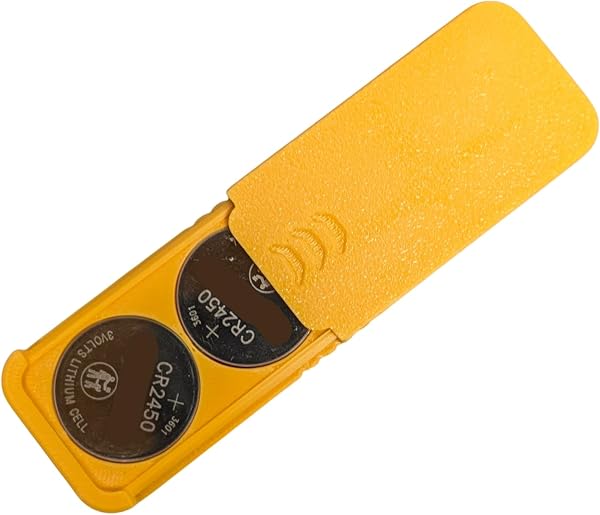
Car key fobs, item trackers, bathroom scales, bike computers, calculators, watches: a surprising number of everyday things run on a single flat battery about the size of a coin. When one dies, the hardest part is usually figuring out exactly which battery to buy. This guide explains how those battery names work, and how to keep spares on hand so you're never stuck.
How to read a coin cell battery name
Most coin cells use a simple naming system. Take CR2032 as an example:
- C means lithium chemistry.
- R means round.
- 20 is the diameter in millimeters (20 mm).
- 32 is the thickness in tenths of a millimeter (3.2 mm).
Once you know the pattern, you can tell sizes apart just from the name. Most lithium coin cells are 3 volts.
Common coin cells compared
| Battery | Approx. size | Common uses |
|---|---|---|
| CR1632 | 16 × 3.2 mm | Many car key fobs and remotes |
| CR2032 | 20 × 3.2 mm | Key fobs, item trackers, scales, fitness gadgets, computer motherboards |
| CR2450 | 24 × 5.0 mm | Some key fobs, bike computers, kitchen and bathroom scales |
A CR2450 is both wider and thicker than a CR2032, so it holds a lot more energy, but the two can't be swapped. Always replace a battery with the exact same number.
Button batteries that go by several names
Smaller button cells are confusing because the same size is sold under different names by different brands and chemistries:
- LR44 is about 11.6 × 5.4 mm and is also sold as AG13, A76, and in silver-oxide versions as SR44 or 357. They power calculators, toys, laser pointers and small electronics.
- LR54 is about 11.6 × 3.05 mm and is also sold as AG10 or 189. You'll find it in watches, small toys and some calculators.
Silver-oxide versions (SR44 and 357) generally hold their voltage more steadily, which is why watch and camera makers often specify them. If your device lists a specific type, use that one.
How to store spare coin and button batteries
- Keep them in their own compartments. When loose batteries touch each other or metal objects like keys and coins, they can short out and drain, or get hot.
- Store at room temperature in a dry place. Heat and humidity shorten shelf life.
- Keep one spare where you'll need it. A spare key fob battery in your glove box or bag is far more useful than a pack in a drawer at home.
Safety first: keep them away from kids and pets
Coin and button batteries are extremely dangerous if swallowed and can cause serious internal injuries within hours. Store spares in a closed case out of reach, tape over or bag used batteries before throwing them away, and check that battery doors on toys and remotes are secure. If you think a child or pet has swallowed one, get emergency medical help immediately. In the U.S. you can also call Poison Control at 1-800-222-1222.
Cases made for your battery size
Each of our battery cases is designed for one specific battery, so every cell sits snugly in its own slot, protected and easy to grab with a slide-open lid. Pick the one that matches your battery:
- CR1632 Coin Battery Case
- CR2032 Coin Battery Case
- CR2450 Coin Battery Case
- LR44 Battery Case (also fits AG13, A76, 357)
- LR54 Battery Case (also fits AG10, 189)
- AAA Battery Case
Batteries are not included with any of our cases.